

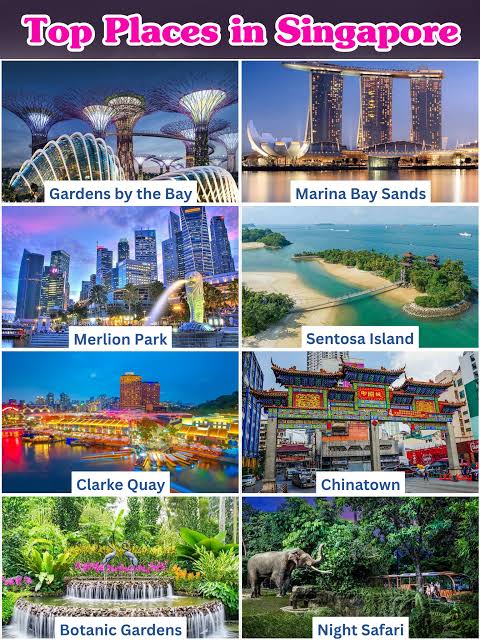
Exploring the Lion City: A Guide to Singapore’s Premier Tourist Destinations
Situated at the southern tip of the Malay Peninsula, the Republic of Singapore has transformed over the past six decades from a bustling colonial trading port into one of the world’s most dynamic global metropolises. Renowned for its visionary urban planning, lush green spaces, and harmonious blend of Chinese, Malay, Indian, and Western influences, Singapore offers travelers an extraordinary concentration of world-class attractions within a compact, easily navigable island. From futuristic architectural marvels along its reclaimed waterfront to historic ethnic enclaves and pristine nature reserves, Singapore’s top tourist destinations reflect a nation that seamlessly balances rapid modernization with deep cultural and ecological preservation.
Marina Bay: The Futuristic Waterfront
At the heart of modern Singapore lies Marina Bay, a gleaming waterfront precinct that serves as the architectural centerpiece of the nation’s skyline. Anchoring the bay is Marina Bay Sands, an integrated resort instantly recognizable by its three soaring hotel towers crowned by the boat-shaped SkyPark. Visitors ascend to the SkyPark Observation Deck for panoramic views stretching from the bustling shipping lanes of the Singapore Strait to the downtown financial district.
Directly adjacent to the resort is the ArtScience Museum, designed in the shape of a welcoming lotus flower. The museum hosts major international exhibitions at the intersection of art, science, culture, and technology, with its permanent Future World installation captivating audiences through interactive digital art. Across the water stands Merlion Park, home to the iconic half-lion, half-fish statue that spouts water into the bay—a mythical symbol representing Singapore’s origins as a fishing village (Temasek) and its historical name, Singapura (“Lion City”).
Gardens by the Bay: A City in Nature
Spanning 101 hectares of reclaimed land adjacent to Marina Bay, Gardens by the Bay exemplifies Singapore’s national vision of transitioning from a “Garden City” to a “City in a Garden.” This horticultural wonderland attracts millions of visitors annually with its blend of cutting-edge sustainable engineering and botanical diversity.
The park’s defining landmarks are the Supertree Grove, a collection of towering vertical gardens measuring between 25 and 50 meters in height. Equipped with photovoltaic cells to harvest solar energy and rainwater collection systems, these structures come alive each evening during the Garden Rhapsody light and sound show. Nearby, two massive climate-controlled glass conservatories—the Flower Dome and the Cloud Forest—replicate cool-dry Mediterranean and cool-moist tropical montane environments, respectively. Inside the Cloud Forest, visitors walk along aerial walkways shrouded in mist beside one of the world’s tallest indoor waterfalls.
Sentosa Island: Resort and Entertainment Hub
Connected to the southern mainland by a causeway, cable car, and monorail, Sentosa Island is Singapore’s premier leisure and resort destination. Once a British military fortress, the island has been meticulously developed into a hub of family-friendly attractions, luxury resorts, and sandy beaches.
At the center of Sentosa’s entertainment offerings is Resorts World Sentosa, which houses Universal Studios Singapore—Southeast Asia’s first and only Universal Studios theme park—alongside the S.E.A. Aquarium, one of the largest marine habitats in the world. Beyond theme parks, Sentosa caters to relaxation and outdoor recreation along its three distinct beaches: Siloso, Palawan, and Tanjong. Visitors seeking historical insight can also explore Fort Siloso, Singapore’s only preserved coastal fort, which features World War II memorabilia, coastal artillery guns, and an elevated skywalk offering sweeping views of the coastline.
Historic Ethnic Enclaves: Chinatown, Little India, and Kampong Gelam
While Singapore’s skyline showcases its futuristic ambitions, its historic districts preserve the rich multicultural tapestry woven by early immigrants.
- Chinatown: A vibrant neighborhood where traditional shophouses stand beside sleek modern skyscrapers. Key landmarks include the Buddha Tooth Relic Temple and Museum, an ornate Tang-dynasty-style complex housing sacred Buddhist artifacts, and the Sri Mariamman Temple, Singapore’s oldest Hindu temple. Visitors also flock to Chinatown’s bustling street markets and hawker centers to sample Michelin-recognized local delicacies.
- Little India: Bursting with color, aromatic spices, and rhythmic music, Little India serves as the cultural heart of Singapore’s Indian community. Iconic sites such as the Sri Veeramakaliamman Temple, intricate garland stalls, goldsmith shops, and the sprawling Tekka Centre offer an immersive sensory experience.
- Kampong Gelam: Historically the seat of Malay royalty in Singapore, this district is centered around the majestic golden-domed Sultan Mosque (Masjid Sultan). Surrounding pedestrian streets like Haji Lane and Arab Street have evolved into trendy enclaves filled with independent boutiques, vibrant street art, and Middle Eastern and Malay eateries.
The Singapore Botanic Gardens and Wildlife Reserves
For travelers seeking immersion in tropical biodiversity, Singapore offers internationally acclaimed ecological attractions. Inscribed as Singapore’s first UNESCO World Heritage Site in 2015, the Singapore Botanic Gardens is a 160-year-old tropical garden located near the Orchard Road shopping belt. Its crowning jewel is the National Orchid Garden, which displays over 1,000 species and 2,000 hybrids of orchids, including bespoke hybrids named after visiting heads of state and global celebrities.
In the northern Mandai precinct, the Mandai Wildlife Reserve brings together four world-renowned zoological parks: the Singapore Zoo, celebrated for its “open concept” naturalistic habitats; Night Safari, the world’s first nocturnal wildlife park; River Wonders, inspired by the world’s iconic river ecosystems; and Bird Paradise, one of Asia’s largest bird parks featuring expansive walk-in aviaries.
Jewel Changi Airport and Orchard Road
Even Singapore’s transit and retail spaces have been elevated into major tourist landmarks. Jewel Changi Airport, a nature-themed entertainment and retail complex linking airport terminals, features the HSBC Rain Vortex—the world’s tallest indoor waterfall, cascading seven stories through a lush terraced indoor forest. Meanwhile, Orchard Road remains the country’s premier retail boulevard, lined with flagship luxury boutiques, sprawling shopping malls, and contemporary art installations.
Conclusion
Singapore’s enduring appeal as a global tourist destination lies in its remarkable diversity and thoughtful curation. Within a single day, a traveler can admire priceless orchids in a UNESCO-listed botanical garden, explore centuries-old temples in historic ethnic quarters, dine on world-famous street food, and marvel at solar-powered Supertrees illuminating a futuristic bay. By continually innovating while honoring its multicultural roots, Singapore offers an unforgettable travel experience that captivates visitors from every corner of the globe.
Leave a Reply