

Singapore and ASEAN: Cornerstone of Diplomacy, Economic Integration, and Regional Stability
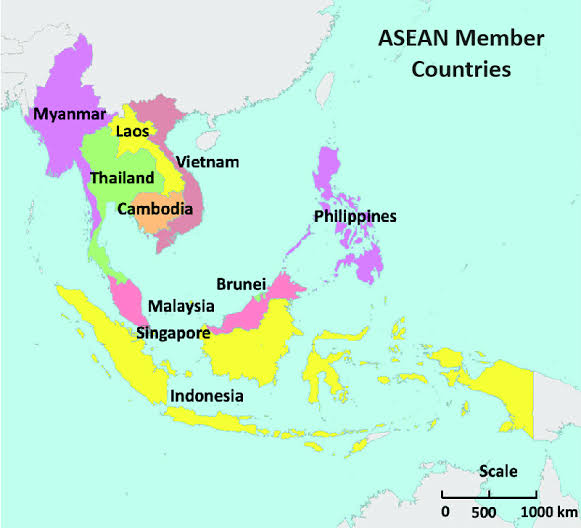
Since gaining independence in 1965, the Republic of Singapore has anchored its foreign policy in the stability, prosperity, and cohesion of Southeast Asia. As a small, resource-scarce island city-state situated at the crossroads of vital international maritime trade routes, Singapore recognized early on that its survival and growth were inextricably tied to a peaceful regional environment. This strategic imperative led Singapore to become one of the five founding members of the Association of Southeast Asian Nations (ASEAN) on August 8, 1967, alongside Indonesia, Malaysia, the Philippines, and Thailand. Over the ensuing decades, ASEAN has evolved from a fragile Cold War diplomatic grouping into a dynamic regional bloc of ten member states—with Timor-Leste advancing toward full accession—and Singapore has consistently served as one of its most committed architects, economic drivers, and diplomatic advocates.
Historical Foundations and Strategic Rationale
In the mid-1960s, Southeast Asia was marked by ideological rivalries, territorial disputes, and post-colonial instability. For a newly independent Singapore, joining the Bangkok Declaration to establish ASEAN was a decisive move to foster regional reconciliation and build mutual trust among neighbors. Through ASEAN, Singapore sought to establish a rules-based regional order where disputes would be resolved peacefully through dialogue rather than coercion, ensuring that small states possessed an equal voice alongside larger neighbors.
Central to this vision is the principle of ASEAN Centrality—the concept that ASEAN must remain the primary driving force in shaping the regional architecture of the broader Asia-Pacific. Singapore has steadfastly championed ASEAN-led mechanisms, such as the East Asia Summit (EAS), the ASEAN Regional Forum (ARF), and the ASEAN Defence Ministers’ Meeting-Plus (ADMM-Plus). By convening major global powers—including the United States, China, Japan, India, Australia, and the European Union—around ASEAN’s table, Singapore helps ensure that Southeast Asia remains an open, inclusive arena for cooperation rather than a theater for zero-sum geopolitical competition.
Driving Economic Integration and Free Trade
Beyond political security, Singapore views ASEAN as an indispensable engine for shared economic prosperity. With a combined population exceeding 670 million people and a rapidly expanding middle class, Southeast Asia represents one of the world’s most promising consumer and manufacturing markets. Because Singapore’s domestic market is small, deep regional economic integration allows businesses based in Singapore to scale across Southeast Asia, while enabling multinational corporations to use Singapore as a financial, logistical, and innovation hub to access the wider region.
Singapore played a pivotal role in establishing the ASEAN Free Trade Area (AFTA) in 1992 and the ASEAN Economic Community (AEC) in 2015, which transformed the region into a single market and production base characterized by the freer flow of goods, services, investment, and skilled labor. Furthermore, Singapore has been a vocal proponent of extending ASEAN’s trade network outward. During its ASEAN Chairmanship in 2018, Singapore helped accelerate negotiations for the Regional Comprehensive Economic Partnership (RCEP), which eventually became the world’s largest free trade agreement, linking ASEAN with five major regional partners.
Pioneering Digital Economy and Sustainability Initiatives
As global commerce transitions toward digitalization and green energy, Singapore has positioned itself at the forefront of modernizing ASEAN’s economic agenda. Recognizing that digital connectivity can bridge development gaps across Southeast Asia, Singapore championed the ASEAN Smart Cities Network (ASCN) in 2018, fostering collaboration among cities across the bloc to deploy technological solutions for urban challenges such as traffic congestion, water management, and public safety.
In recent years, Singapore has actively driven negotiations on the ASEAN Digital Economy Framework Agreement (DEFA), which aims to harmonize digital trade rules, facilitate cross-border data flows, and enhance interoperability in digital payments across member states. Simultaneously, Singapore is partnering closely with ASEAN neighbors on sustainability and energy transition. Through initiatives such as the ASEAN Power Grid, Singapore is working with countries like Laos, Thailand, Malaysia, Indonesia, and Cambodia to import low-carbon electricity, thereby supporting regional decarbonization goals while strengthening its own energy security.
Bridging the Development Gap and People-to-People Ties
Singapore maintains that ASEAN’s collective strength depends on the equitable progress of all its members. To help narrow the development divide between older and newer ASEAN states—specifically Cambodia, Laos, Myanmar, and Vietnam—Singapore launched the Initiative for ASEAN Integration (IAI) in 2000. Through IAI training centers established in these nations, Singapore has provided technical assistance and capacity-building programs to tens of thousands of government officials in areas ranging from public administration and English proficiency to digital governance and climate resilience.
Equally important are the deep socio-cultural and people-to-people links that bind Singapore to its Southeast Asian neighbors. Millions of ASEAN citizens visit, study, and work in Singapore each year, contributing to vibrant cultural exchanges and mutual understanding. Educational scholarships, youth exchange programs, and ASEAN heritage initiatives further reinforce a shared regional identity among younger generations.
Navigating Contemporary Challenges
Despite its remarkable achievements, ASEAN faces significant internal and external pressures. Intensifying strategic rivalry between major global powers tests the bloc’s unity and neutrality. Internally, protracted crises—most notably the political and humanitarian turmoil in Myanmar—have strained ASEAN’s traditional consensus-based decision-making model and tested its credibility.
In addressing these challenges, Singapore advocates a pragmatic and principled approach. While respecting ASEAN’s core tenets of non-interference and consensus, Singapore has emphasized that the bloc must remain agile, relevant, and responsive to emerging realities. Whether upholding international maritime law in the South China Sea, combating transnational cybercrime, or strengthening regional supply chain resilience, Singapore consistently urges fellow member states to maintain collective solidarity.
Leave a Reply