

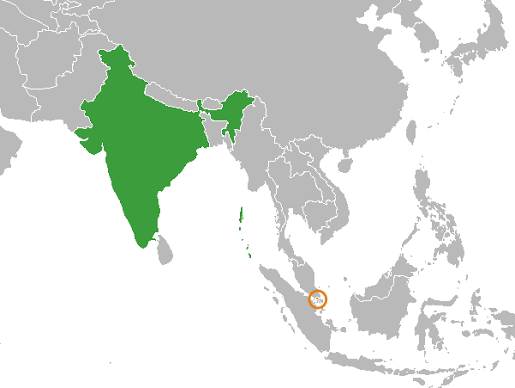
Singapore–India Relations: A Comprehensive Strategic Partnership Anchored in History and Innovation
The bilateral relationship between the Republic of Singapore and the Republic of India stands as one of the most dynamic, resilient, and forward-looking partnerships in the Indo-Pacific region. Rooted in centuries-old cultural, linguistic, and mercantile exchanges across the Bay of Bengal, modern ties between the two nations have evolved from warm post-colonial solidarity into a multifaceted Comprehensive Strategic Partnership. Today, Singapore serves as India’s vital gateway to Southeast Asia and the broader Asia-Pacific, while India represents a cornerstone of Singapore’s economic diversification, regional security architecture, and long-term growth strategy.
Historical Foundations and Diplomatic Evolution
Historical interactions between the Indian subcontinent and the Malay Archipelago date back over a millennium, leaving an indelible imprint on Singapore’s cultural fabric, architecture, and pluralistic society. Ethnic Indians constitute one of Singapore’s four major communities, and Tamil is recognized as one of the city-state’s four official languages alongside English, Malay, and Mandarin.
In the modern era, diplomatic relations were formally established on August 24, 1965, making India one of the first nations to recognize Singapore’s independence. However, bilateral engagement gained transformative momentum in the early 1990s when India launched its economic liberalization reforms and initiated its Look East Policy, later upgraded to the Act East Policy. Singapore swiftly recognized India’s immense economic potential and positioned itself as an enthusiastic advocate for India’s deeper integration into Southeast Asian institutional frameworks, including the Association of Southeast Asian Nations (ASEAN) and the East Asia Summit.
In 2015, marking the fiftieth anniversary of diplomatic ties, both governments elevated their relationship to a Strategic Partnership. This trajectory reached a new milestone in September 2024, when the partnership was further upgraded to a Comprehensive Strategic Partnership, reflecting deepening convergence across defense, advanced manufacturing, digitalization, and sustainability.
Economic Cooperation and Trade Synergy
Economic interdependence forms the bedrock of Singapore–India relations. In 2005, Singapore became the first country to sign a bilateral Comprehensive Economic Cooperation Agreement (CECA) with India. This landmark pact lowered tariff barriers, liberalized trade in services, protected bilateral investments, and streamlined customs procedures, catalyzing a dramatic expansion in commercial flows.
- Foreign Direct Investment: Singapore has consistently ranked among India’s largest sources of Foreign Direct Investment (FDI), frequently holding the top position over the past several years. Singaporean sovereign wealth funds, institutional investors, and private enterprises have deployed tens of billions of dollars into Indian infrastructure, real estate, logistics, renewable energy, telecommunications, and financial services.
- Indian Corporate Presence in Singapore: Conversely, Singapore has emerged as the preferred regional headquarters for thousands of Indian companies seeking to expand into Southeast Asia and global markets. Leading Indian conglomerates in information technology, pharmaceuticals, banking, and manufacturing maintain major operational hubs in the city-state.
- Industrial and Urban Development: Singaporean expertise in urban planning and industrial park development has contributed directly to India’s infrastructure modernization, exemplified by projects such as the International Tech Park Bangalore and collaborative initiatives in smart city development and skill training across several Indian states.
Digital Connectivity and Financial Innovation
In recent years, bilateral cooperation has expanded decisively into the digital economy, setting global benchmarks for cross-border financial integration. A premier achievement in this domain is the real-time linkage between India’s Unified Payments Interface (UPI) and Singapore’s PayNow system. Launched in 2023, this pioneering initiative enables individuals and businesses in both countries to execute instant, low-cost cross-border remittances using mobile phone numbers or virtual payment addresses, significantly benefiting migrant workers, students, and small enterprises.
Beyond retail payments, Singapore and India collaborate closely through the Gujarat International Finance Tec-City (GIFT City), where Singaporean financial institutions participate in cross-border capital market connectivity. Both nations also engage in joint dialogues on fintech regulation, cybersecurity, artificial intelligence governance, and digital public infrastructure, reinforcing their shared commitment to innovation-driven growth.
Defense, Maritime Security, and Strategic Alignment
As maritime nations situated along critical sea lanes connecting the Indian and Pacific Oceans, Singapore and India share an overriding strategic interest in maintaining a free, open, inclusive, and rules-based Indo-Pacific. Defense cooperation has grown steadily in depth and sophistication, anchored by bilateral agreements covering army, naval, and air force collaboration.
- Joint Military Exercises: The Singapore–India Maritime Bilateral Exercise (SIMBEX), initiated in 1994, stands as one of the longest-running uninterrupted bilateral naval exercises conducted by the Indian Navy with any foreign partner. In addition, the two militaries conduct regular bilateral army exercises (Agni Warrior) and joint military training for the Republic of Singapore Air Force at Indian air bases, addressing Singapore’s geographic airspace constraints.
- Maritime Domain Awareness: Both countries actively cooperate on anti-piracy operations, humanitarian assistance and disaster relief (HADR), and maritime information sharing through Singapore’s Information Fusion Centre, enhancing collective security across the Strait of Malacca and the Andaman Sea.
Emerging Pillars: Semiconductors, Green Energy, and Healthcare
Looking toward future decades, Singapore and India have institutionalized high-level ministerial mechanisms—most notably the India–Singapore Ministerial Roundtable (ISMR)—to steer cooperation in next-generation sectors.
- Semiconductor Ecosystem: Recognizing the strategic necessity of resilient global supply chains, both nations signed a dedicated Memorandum of Understanding on semiconductor ecosystem partnership. This framework facilitates joint research and development, talent exchange, and investment opportunities linking Singapore’s established wafer fabrication and design capabilities with India’s rapidly expanding semiconductor manufacturing ambitions.
- Sustainability and Clean Energy: Climate action and energy transition represent another vital frontier. Bilateral initiatives explore cross-border green hydrogen and green ammonia supply chains, solar energy deployment, carbon credit trading frameworks, and sustainable urban water management.
- Healthcare and Skill Development: Cooperation in medical technology, pharmaceutical supply chains, and vocational skill development continues to expand, supported by joint training centers across India that equip young workers with industry-ready technical capabilities.
People-to-People Ties and Cultural Resonance
Underpinning official diplomacy is a vibrant bridge of human connectivity. Dense air links connect Singapore’s Changi Airport with more than a dozen Indian cities, facilitating robust flows of tourists, business executives, academics, and students. Cultural institutions, academic exchange programs, and diaspora networks ensure that shared heritage translates into contemporary mutual understanding, reinforcing trust across every tier of society.
Leave a Reply