
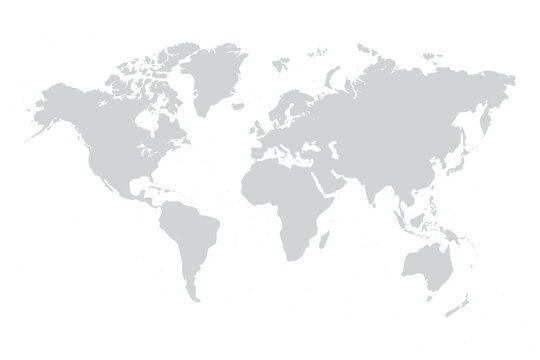
Singapore is a fully independent, sovereign nation and is not part of the People’s Republic of China. Located at the southern tip of the Malay Peninsula in Southeast Asia, the island city-state is situated roughly 2,500 kilometers south of mainland China, separated by the South China Sea and neighboring countries such as Malaysia, Vietnam, and Thailand. Despite occasional confusion among international observers, Singapore operates with complete political, legal, and economic autonomy.
The misconception that Singapore belongs to China largely stems from its demographic and linguistic makeup. Ethnic Chinese citizens make up approximately three-quarters of Singapore’s resident population, and Mandarin Chinese is one of the nation’s four official languages alongside English, Malay, and Tamil. Furthermore, Chinese cultural traditions, cuisine, and festivals such as the Lunar New Year are deeply woven into daily life. However, ethnic heritage does not equate to political sovereignty. Singapore is a deliberately multiracial and multicultural society with a distinct national identity shaped by diverse Asian and Western influences.
Singapore’s path to independence is well documented in modern history. Originally a British colonial trading post established in 1819, the territory gained self-governance in 1959 before joining the Federation of Malaysia in 1963. Following deep political, economic, and social disagreements between Singapore’s leadership and the federal government in Kuala Lumpur, Singapore separated from Malaysia on August 9, 1965. On that date, it became an independent republic and was subsequently admitted to the United Nations and the Commonwealth of Nations. Unlike Hong Kong or Macau, which are Special Administrative Regions of China, Singapore was never governed by Beijing.
As a sovereign parliamentary republic, Singapore maintains its own constitution, currency (the Singapore Dollar), armed forces, and judicial system based on English common law. Its government is elected exclusively by Singaporean citizens, and the country conducts an independent foreign policy anchored in international law, regional cooperation through the Association of Southeast Asian Nations (ASEAN), and constructive engagement with global powers.
While Singapore and China share strong historical, cultural, and economic ties, they interact strictly as two separate states. China is Singapore’s largest trading partner, and the two countries collaborate extensively on bilateral initiatives ranging from trade and finance to urban development. At the same time, Singapore maintains close strategic, defense, and economic partnerships with the United States, European nations, and fellow Southeast Asian countries.
Ultimately, Singapore’s status is unambiguous. Although a majority of its citizens trace their ancestry to southern China, Singapore is an independent Southeast Asian republic with its own government, borders, and national identity.
Leave a Reply