

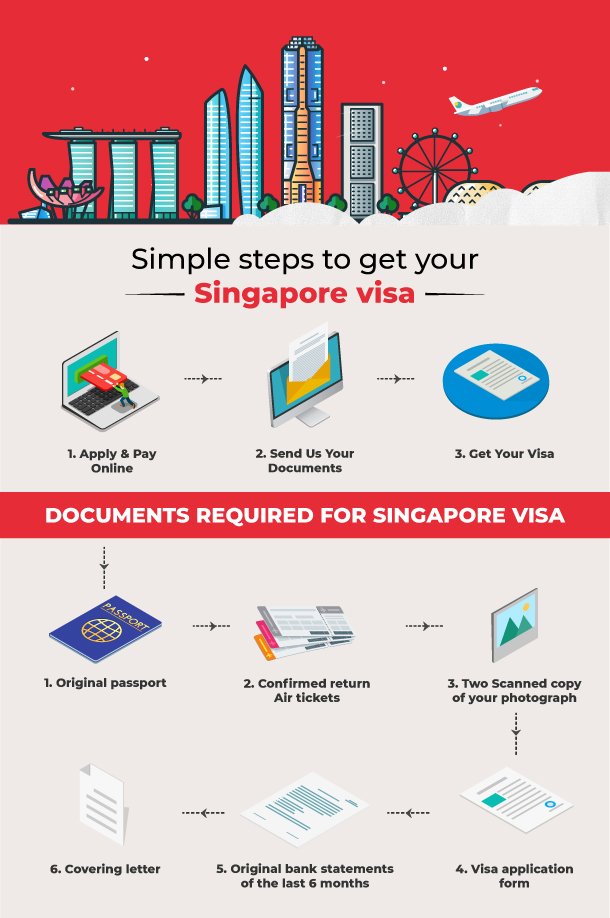
Determining whether a bank statement is mandatory for a Singapore tourist visa depends on the applicant’s nationality, submission channel, and individual financial profile. Under the guidelines established by the Immigration & Checkpoints Authority (ICA) of Singapore, foreign nationals holding passports from Assessment Level I and Assessment Level II countries are required to obtain an entry visa prior to traveling. While the core baseline checklist issued by the ICA focuses primarily on a valid passport, a completed Form 14A, a recent passport-sized photograph, and a Letter of Introduction (Form V39A) where applicable, financial documentation frequently becomes a decisive requirement during the evaluation process.
In practice, Singapore does not accept direct individual walk-in applications for tourist visas at most diplomatic missions. Instead, applicants must submit their paperwork through authorized visa agents, strategic partners, or a local sponsor in Singapore. In countries such as India, China, and several Commonwealth of Independent States nations, authorized visa agents routinely mandate the submission of recent personal bank statements—typically covering the preceding three to six months—as part of their standard document verification protocol. This requirement ensures that the application meets strict consular standards before it is formally lodged with the Singapore High Commission or Consulate-General.
The primary purpose of requesting a bank statement is to verify that the prospective visitor possesses sufficient financial means to sustain themselves throughout their stay in Singapore without seeking unauthorized employment or becoming a burden on public resources. Consular officers and authorized agents examine these records for two main indicators: an adequate closing balance and consistent financial stability. A healthy account balance demonstrates that the traveler can comfortably cover accommodation, meals, local transportation, and incidental expenses. Equally important is a steady transaction history, which reassures authorities that the funds are legitimate and not the result of sudden, unexplained large deposits made solely to inflate the balance prior to application.
There are, however, specific circumstances under which a personal bank statement may be waived or substituted. If an applicant is traveling on a fully sponsored trip—such as a minor traveling with parents, a homemaker supported by a spouse, or an individual invited by a Singapore citizen or permanent resident—the financial documents of the sponsor are submitted instead. In such cases, the sponsor must provide their own bank statements, proof of income, and a formal sponsorship letter confirming full financial responsibility for the applicant. Additionally, applicants who possess a strong, established travel history to Singapore or other developed jurisdictions, or those applying through a trusted local contact in Singapore who submits the application online via the ICA portal, may occasionally face less stringent upfront financial documentation checks.
Nevertheless, even when a bank statement is not strictly listed as a mandatory upfront document by a particular channel, immigration officers retain the absolute authority to request additional supporting evidence at any stage of processing. Furthermore, holding an approved Singapore tourist visa does not guarantee automatic entry into the country. Upon arrival at any Singapore checkpoint, ICA officers may ask travelers to present proof of sufficient funds, alongside confirmed return flight tickets and accommodation details, before granting final immigration clearance.
Leave a Reply