

Navigating the Lion City with Grace: A Guide to Singapore Tourism Etiquette
Renowned globally for its immaculate streets, seamless public infrastructure, and harmonious multicultural society, the Republic of Singapore offers visitors one of the safest and most welcoming travel experiences in the world. However, Singapore’s enviable standard of civic order and social cohesion does not exist by accident; it is sustained by a combination of deeply ingrained cultural norms, mutual respect among diverse ethnic communities, and strictly enforced public regulations. For international travelers, understanding Singapore tourism etiquette is essential not only for avoiding inadvertent legal infractions, but also for engaging respectfully with local customs across its Chinese, Malay, Indian, and Eurasian communities.
Multicultural Sensitivity and Religious Etiquette
Singapore’s social fabric is defined by its multi-ethnic and multi-religious population. Visitors frequently explore historic neighborhoods such as Chinatown, Little India, and Kampong Gelam, where Buddhist temples, Hindu shrines, mosques, and churches stand within walking distance of one another. Observing proper etiquette at these sacred sites is a fundamental sign of respect.
- Modest Attire: When visiting places of worship—particularly mosques such as Masjid Sultan and Hindu temples like Sri Mariamman Temple—visitors should dress conservatively. Shoulders and knees must be covered; many major temples and mosques provide complimentary shawls or sarongs at the entrance for tourists who need them.
- Footwear Removal: Removing one’s shoes before entering a mosque, Hindu temple, or private Singaporean home is mandatory. Designated shoe racks are typically provided outside the main prayer halls.
- Photography and Conduct: Visitors should speak softly, silence mobile phones, and avoid interrupting worshippers during prayer rituals. Always check for signage prohibiting photography, and never pose disrespectfully beside religious statues or altars.
- Hand Gestures and Physical Contact: In Malay and Indian cultures, the left hand is traditionally associated with personal hygiene. Travelers should use their right hand—or both hands—when passing money, accepting gifts, or eating traditional meals without utensils. Additionally, pointing directly at people with an index finger is considered impolite; using an open hand or a gentle nod is preferred.
Dining and Hawker Center Customs
Singapore’s UNESCO-inscribed hawker culture is a centerpiece of the visitor experience, offering world-class cuisine in bustling, open-air food courts. Navigating these communal dining spaces smoothly requires familiarity with several distinctly local conventions.
- The Art of “Chope”: During peak lunch and dinner hours, seating at popular hawker centers can be scarce. Locals reserve empty seats by placing a small personal item—most famously a packet of tissues, an umbrella, or a lanyard—on the table before queuing for food. This practice, known as chope, is universally respected. Visitors should never remove a tissue packet to claim a seat, and may adopt the custom themselves when dining alone.
- Tray Return Regulations: Unlike in many countries where custodial staff clear tables, Singapore enforces mandatory tray and crockery return laws at hawker centers, food courts, and coffee shops. Diners must clear their own trays, dirty dishes, and tissue litter into designated return stations upon finishing their meal, or risk receiving a formal warning or fine.
- Halal and Dietary Considerations: Because Singapore has a significant Muslim population, many food establishments are certified Halal. Visitors should avoid bringing non-Halal outside food or alcoholic beverages into Halal-certified restaurants or seating zones. When dining with local companions, offering food or business cards with both hands conveys politeness and sincerity.
Public Transport and Civic Conduct
Singapore’s Mass Rapid Transit (MRT) system and public buses are celebrated for their punctuality and cleanliness, maintained through clear rules of commuter etiquette.
- Queuing and Boarding: Commuters are expected to form orderly queues along the platform markings and allow alighting passengers to exit the train before boarding.
- Escalator Etiquette: On escalators in train stations and shopping malls, the unwritten rule is to stand on the left side and keep the right lane clear for commuters who wish to walk briskly.
- Priority Seating: Seats near train doors are designated for elderly passengers, pregnant women, individuals with disabilities, and parents with young children. Even when carriages are uncrowded, keeping these seats available or vacating them promptly when needed is expected.
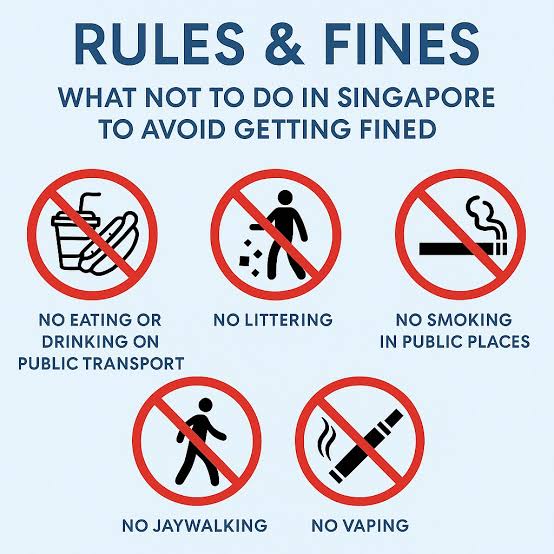
- Strict Prohibitions: Eating and drinking—even plain water—are strictly prohibited inside MRT stations and on trains and buses, carrying fines of up to S$500. Additionally, durians, prized locally as the “King of Fruits” for their rich flavor, are banned on public transportation and inside most hotels due to their pungent aroma.
Laws, Cleanliness, and Public Order
Singapore is famously dubbed a “Fine City”—a playful nod both to its high quality of life and its comprehensive system of financial penalties designed to protect public hygiene and safety. Travelers should remain mindful of several strictly enforced regulations:
- Littering and Spitting: Discarding even small items such as cigarette butts, tissue paper, or receipts on the ground carries hefty fines, with repeat offenders facing corrective work orders. Spitting in public spaces is likewise illegal.
- Chewing Gum Regulations: While tourists are permitted to bring a small quantity of chewing gum for personal consumption, importing, selling, or spitting gum onto public surfaces is strictly prohibited.
- Smoking and Vaping: Smoking is banned in almost all indoor public spaces, covered walkways, bus stops, parks, and within five meters of building entrances. Smokers must use designated yellow smoking boxes. Furthermore, electronic cigarettes and vaporizers are completely illegal in Singapore; possessing or using a vape can result in severe fines or prosecution.
- Jaywalking: Pedestrians must use designated crosswalks, pedestrian overhead bridges, or underpasses when within fifty meters of a crossing point.
Tipping and Everyday Interactions
In terms of financial etiquette, tipping is neither expected nor customary in Singapore. Most sit-down restaurants and hotels automatically include a 10% service charge and a 9% Goods and Services Tax (GST) on the final bill. While rounding up a taxi fare or tipping hotel bellhops for exceptional assistance is appreciated, declining tips in casual eateries is common.
In daily conversation, Singaporeans communicate primarily in English, often infused with Singlish—a vibrant local creole incorporating Malay, Hokkien, Cantonese, and Tamil expressions. Maintaining a polite, patient demeanor, addressing elders as “Uncle” or “Auntie” when appropriate, and respecting personal queues will ensure smooth, friendly interactions throughout the island.
Conclusion
Observing proper tourism etiquette in Singapore requires little more than mindfulness, cultural curiosity, and respect for shared public spaces. By honoring religious traditions, participating in hawker center tray-return norms, respecting transit rules, and abiding by local civic laws, travelers contribute directly to the cleanliness, safety, and harmony that make Singapore extraordinary. Ultimately, approaching the Lion City with cultural sensitivity transforms a simple holiday into a deeply rewarding and respectful cross-cultural exchange.
Leave a Reply